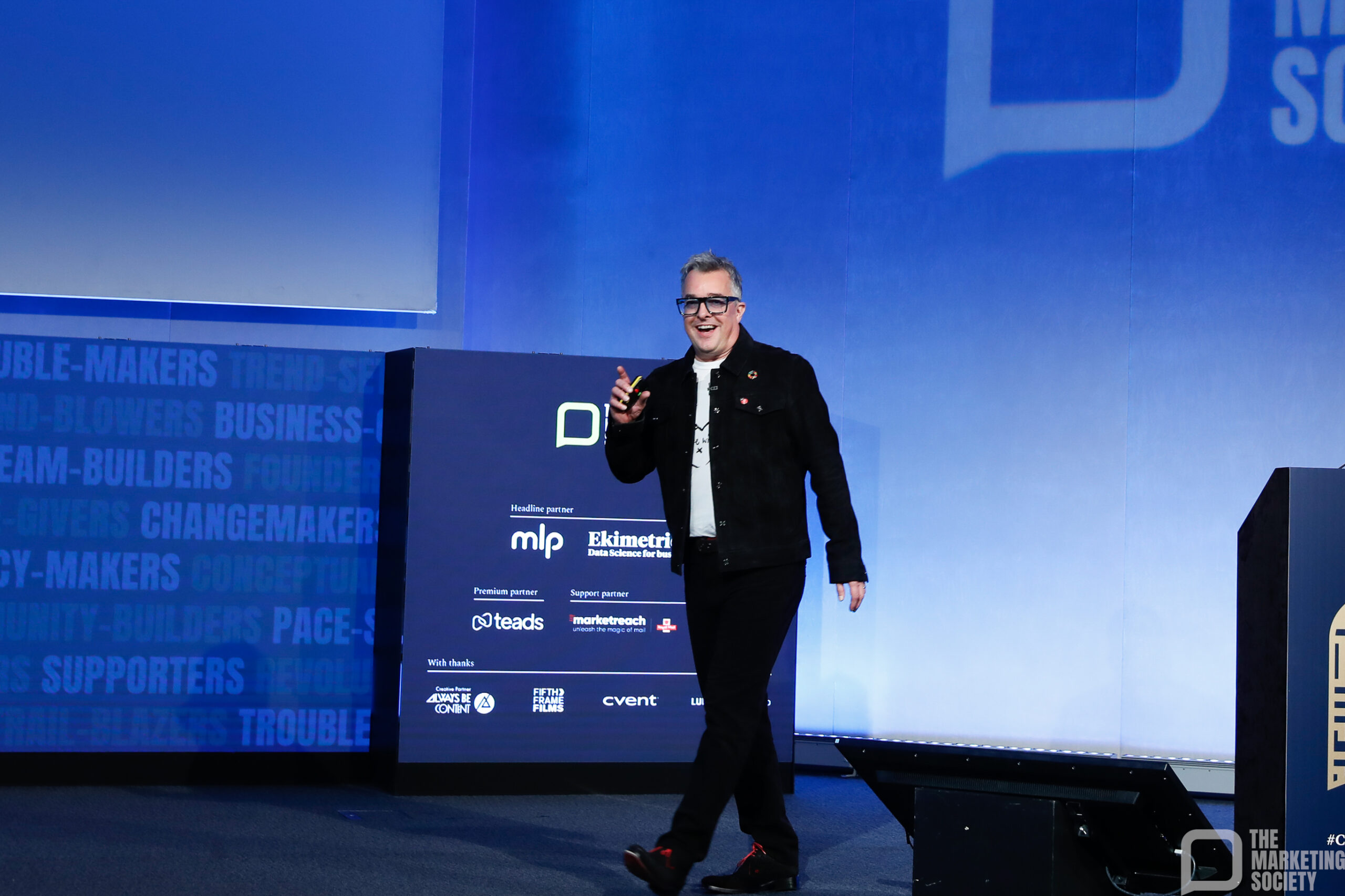
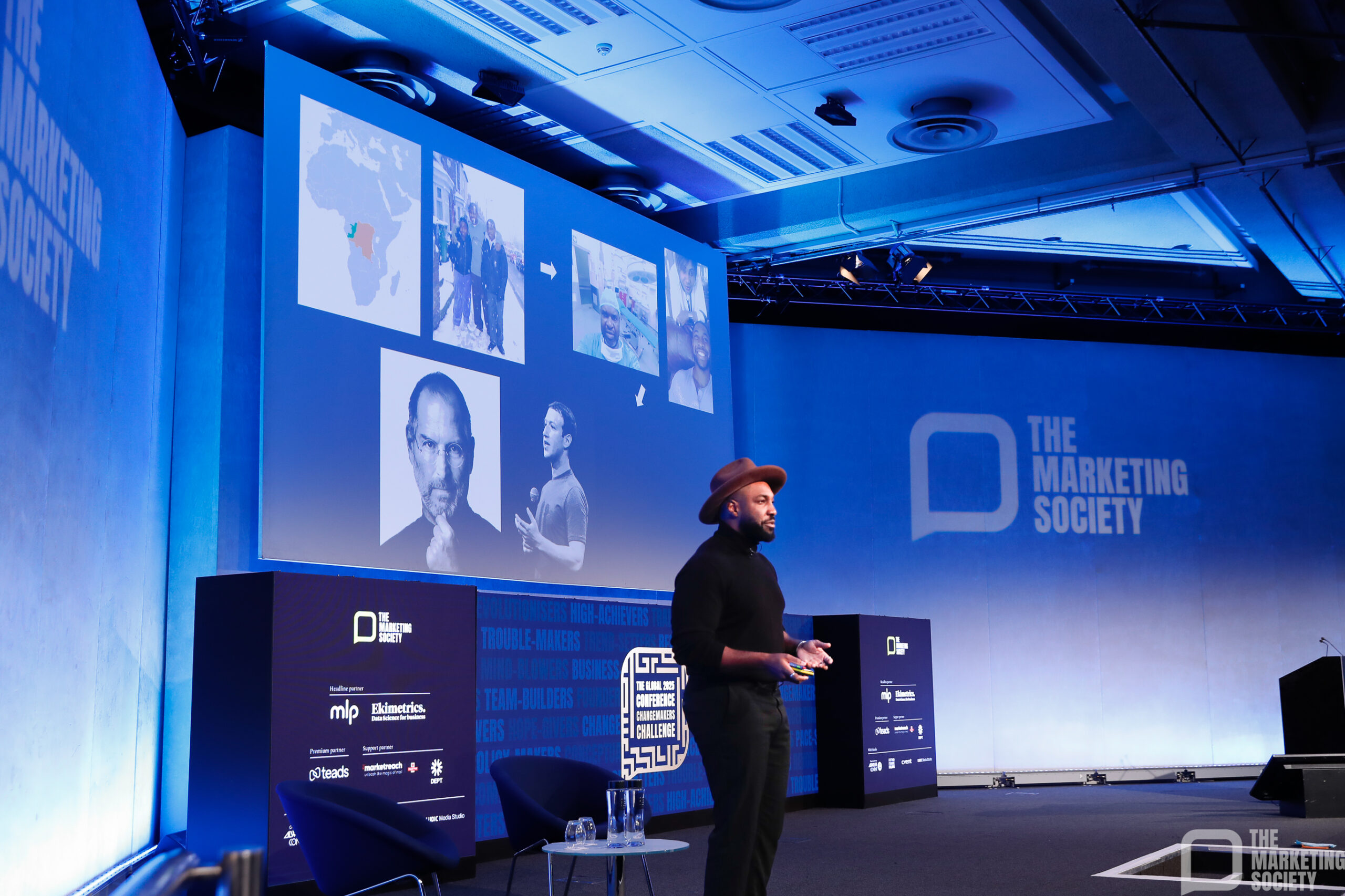
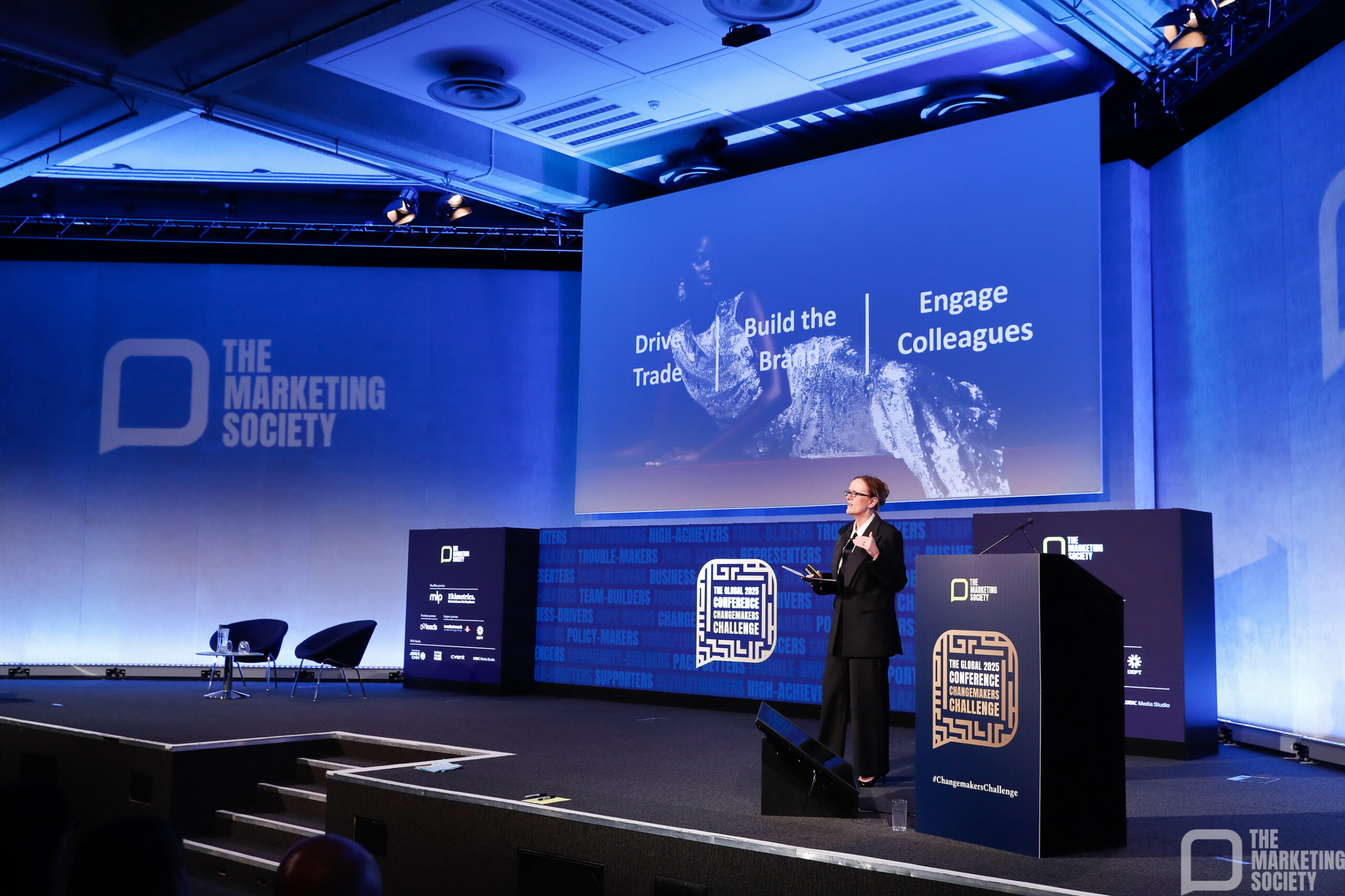
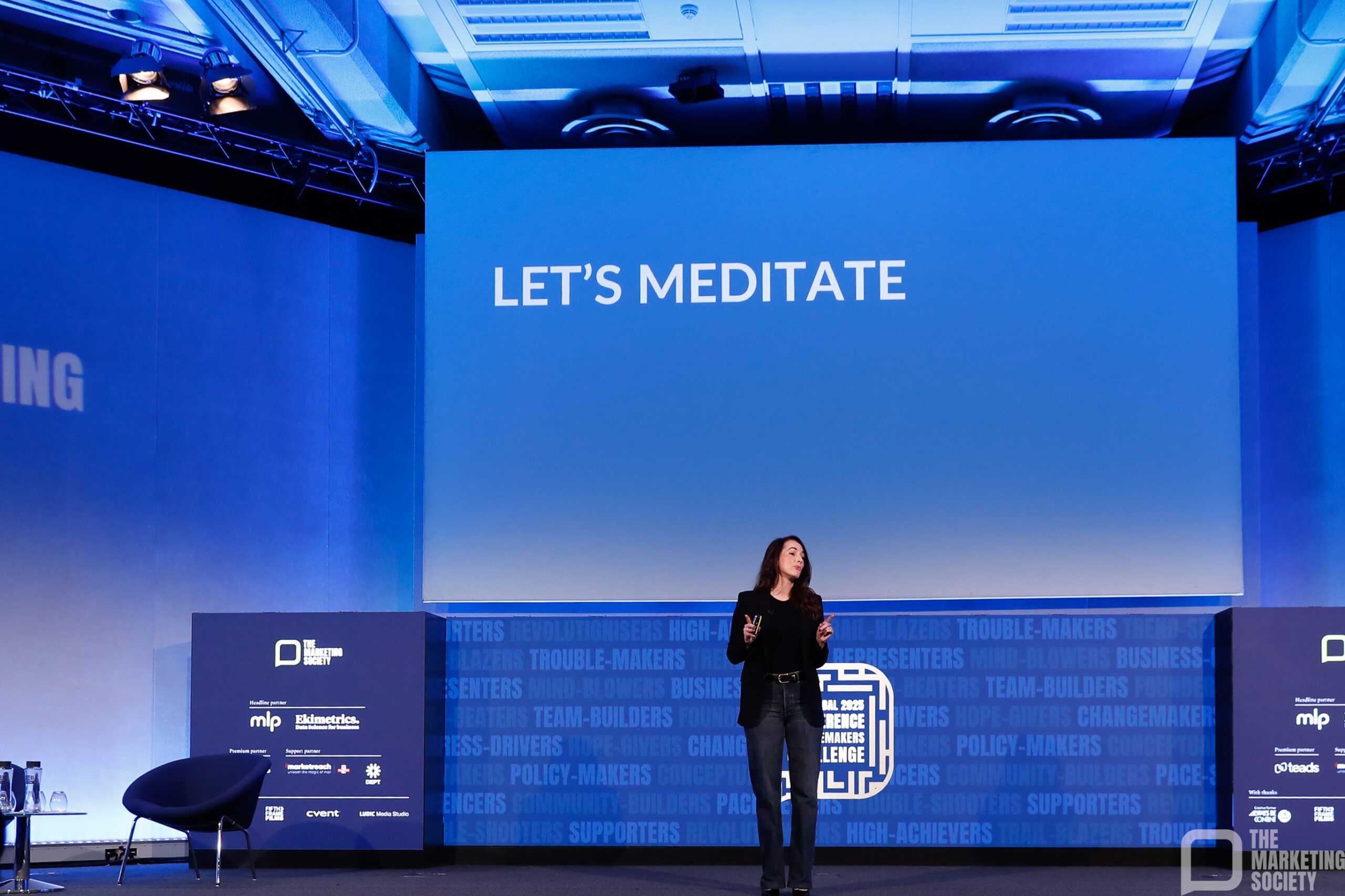
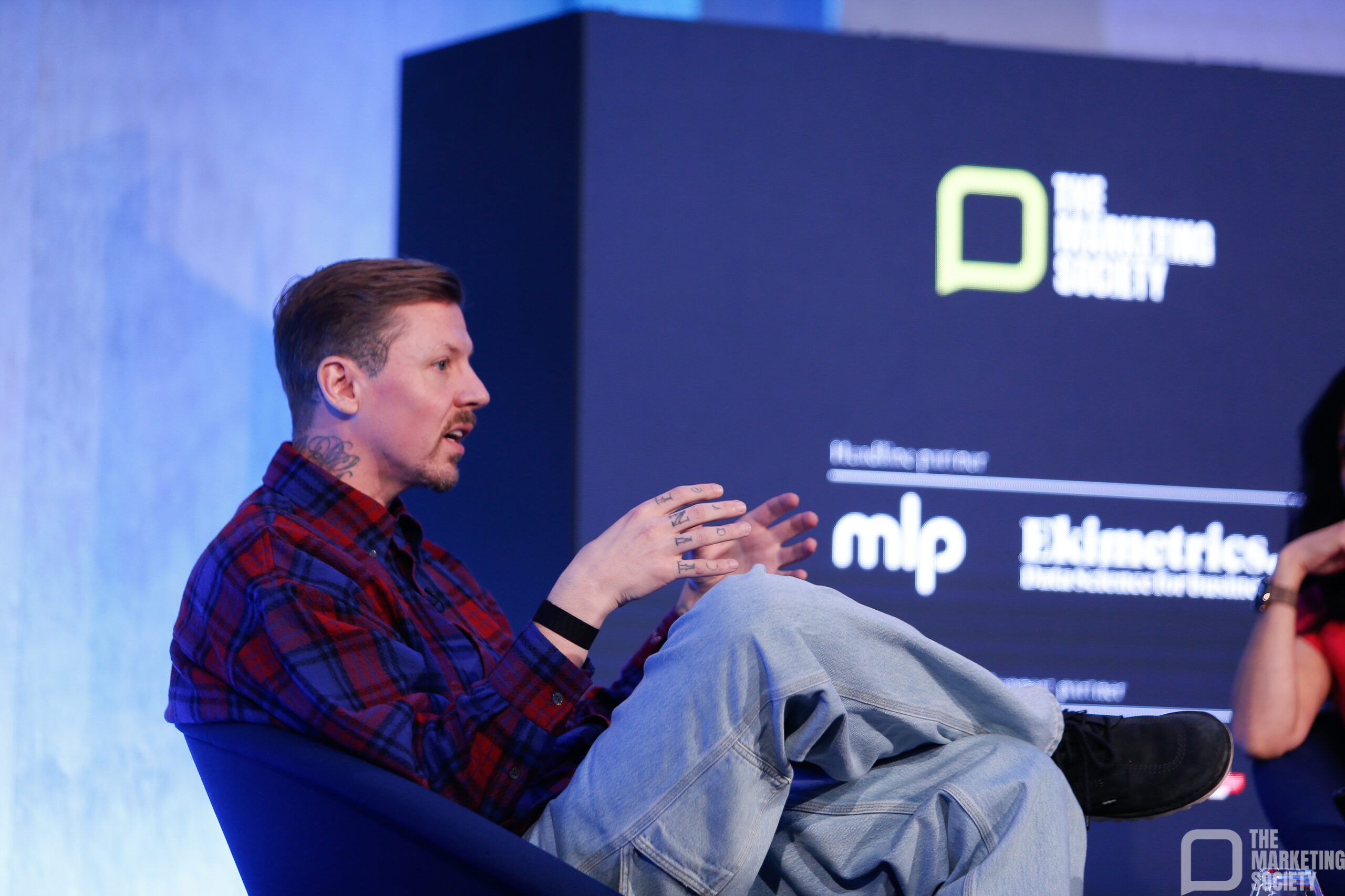
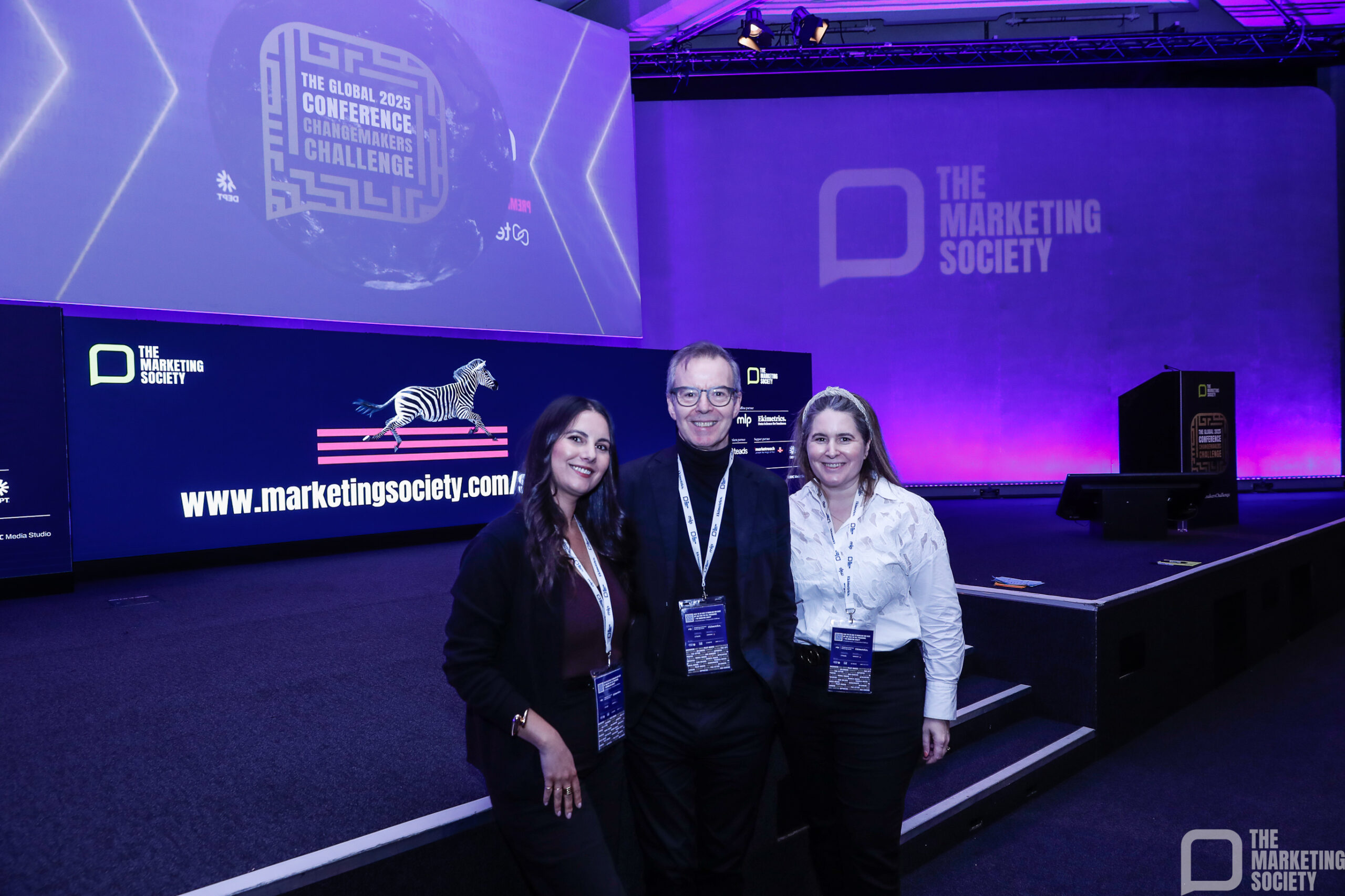
This week, on an unseasonably warm November Wednesday, we made our way to the Queen Elizabeth II Centre in Westminster for the Marketing Society’s London edition of Changemakers. With this year’s theme being “Challenge”, the day fittingly opened in the realm of politics.
While no one quite knew what to expect from a former Chief of Staff in Theresa May’s government, Lord Gavin Barwell turned out to be a surprisingly steady scene-setter. And given the backdrop of geopolitical tension, social unrest and a wider sense of global instability, you’d be forgiven for expecting a gloomy start. Instead, the speakers who followed proved that, even in unpredictable times, there is still much to be hopeful about.
Challenging Assumptions: From Convention to Codification
The Marketing Society’s new President, Dame Carolyn McCall, set the tone early, urging marketers to challenge convention.
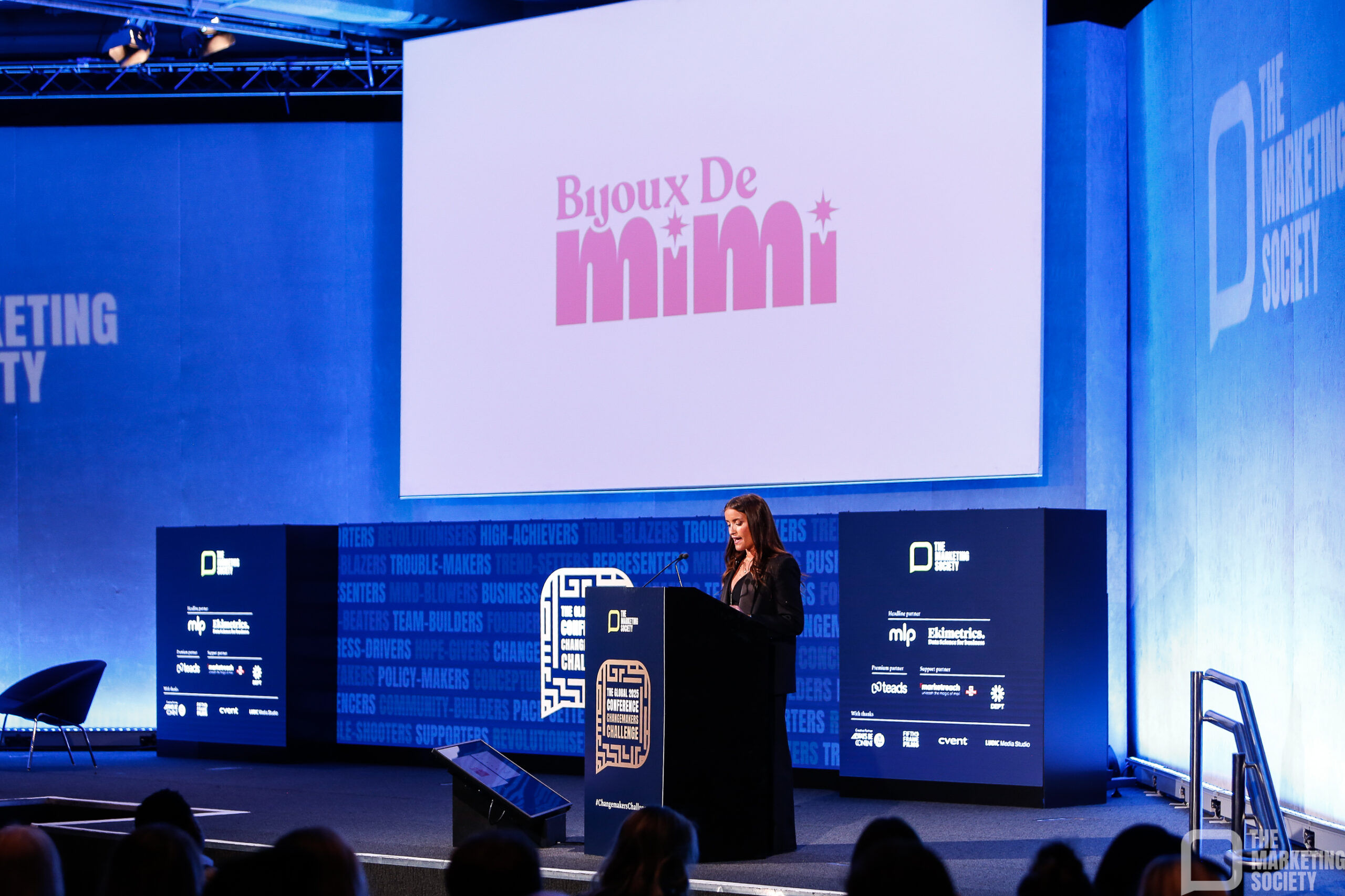
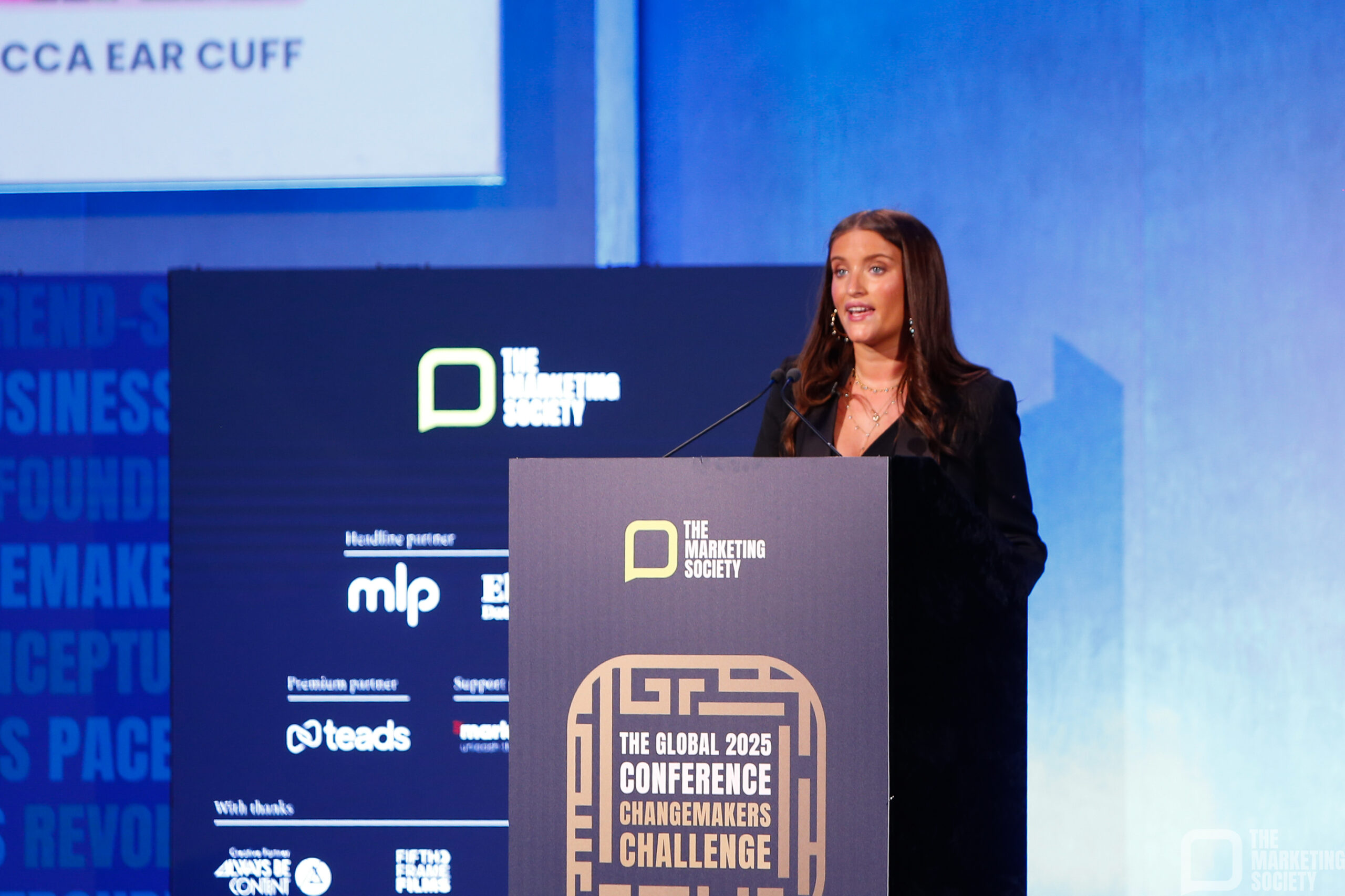
But it was a sparkly 24-year-old, Amelia Hitchcock-Merritt, who reminded us why we damn well love marketing in the first place. Founder of Bijoux De Mimi, “TikTok’s favourite jewellery brand”, Amelia launched at 18 from her bedroom with just £400. Now she’s turning over £10 million a year.
Her delivery may have been gloriously Gen Z, but her instinctive grasp of codification, community-building, loyalty loops and brand consistency would make Byron Sharp proud. Amelia reminded us that the newest playbook still rests on the oldest truths: know your codes, know your audience, and show up consistently.
Her story reset how many in the room think about young entrepreneurs: not disruptors for disruption’s sake, but clear-eyed marketers who understand which principles endure – and how to execute them with fresh energy, intuition and cultural fluency.
The Power of Story: Purpose, Playfulness and Giving a Crap
From youthful audacity to purpose-led enterprise, the theme of challenging the status quo kept unfolding.
Few embodied it better than Who Gives a Crap, as Emily Kraftman spoke candidly about not taking things too seriously. Just take co-founder Simon Griffiths’ now-famous 50-hour toilet livestream. While it sounds like a dare gone wrong, it walked the exact line between stunt and strategy that brilliant ideas often do. Ridiculous, yes. Effective, absolutely. And it helped build a brand with genuine purpose and global impact.
Later, Jeremy Connell-Waite reminded us that: “You can change the world by telling better stories.”
He spoke about narrative as the connective tissue between belief, behaviour and action. And Elfried Samba grounded that idea in practice: if you want trust, you need to be seen, to listen, and to genuinely care. Story, purpose and authenticity aren’t hollow ideals – they’re what give brands weight when the world feels wobbly.
Joy as a Radical Challenge
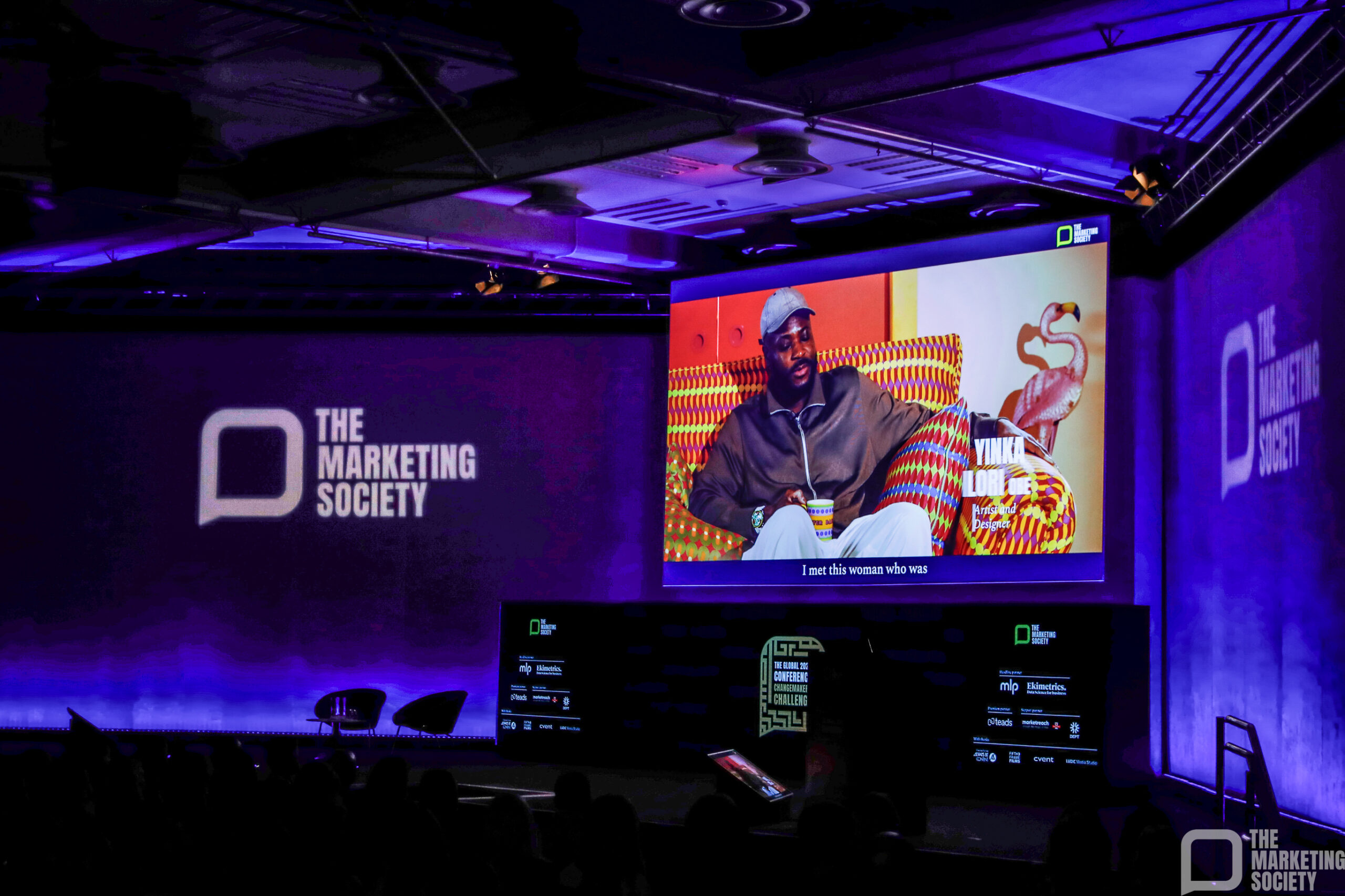
If story connects us, joy sustains us. And few proved that more vividly than designer Yinka Ilori.
Yinka showed how colour, play and optimism can transform even the greyest public spaces. His work argues that joy itself is a form of rebellion – a challenge to the heaviness that creeps into daily life.
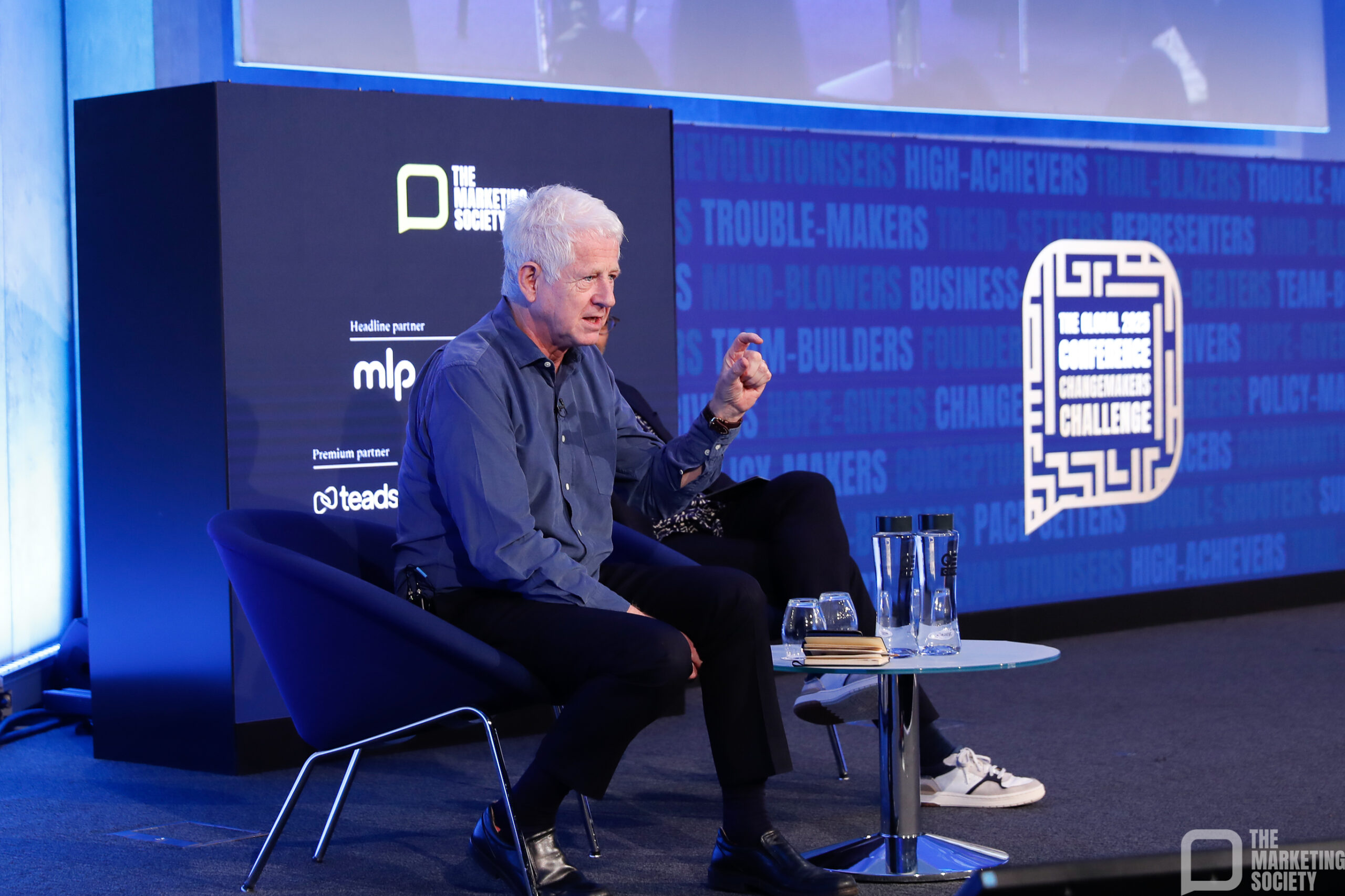
And then came two icons whose names feel woven into the UK’s cultural fabric: Sir Lenny Henry and surprise guest Richard Curtis. Together, they reflected on 40 years of Comic Relief: a project built on the belief that humour can do far more than entertain. It can catalyse empathy. It can mobilise action. It can raise £1.3 billion and counting.
Because joy, wielded with purpose, is powerful.
Challenging Culture from the Inside Out
Research suggests it takes just 3.5% of people to shift collective behaviour – a statistic that hits differently when you work in a large organisation.
For Sharry Cramond at Marks & Spencer, that meant rallying 70,000 colleagues into a community of brand ambassadors, helping M&S become the UK’s “Best Brand” three years running.
At McLaren Racing, Zak Brown spoke about the discipline behind great teams: building trust, forming strong partnerships and focusing on marginal gains. Big, visible successes come from small, intentional steps carried out repeatedly and well.
It echoed something we understand deeply in our own agency: great work starts with great culture. When people trust each other, enjoy collaborating and feel invested in shared outcomes, everything improves: the ideas, the relationships, the results.
Internal culture isn’t a side project. It’s the foundation of good work.
The Challenge to Change
As the day drew to a close, rapper and activist Professor Green brought everything full circle. The real challenge, he suggested, isn’t political, economic or technological – it’s personal. It’s the challenge to actually change.
And while change is rarely comfortable, the speakers showed repeatedly that our industry is more than capable of adapting, reinventing and rising to whatever comes next. If we want to build on that momentum, there are a few takeaways worth remembering:
1. It starts with us. And the 3 Ps of mindfulness:
Nothing is perfect. Nothing is permanent. Nothing is personal. Self-compassion is the foundation of creativity, resilience and confidence.
2. Doing good is good business.
Purpose is a strategic choice. When brands act with integrity and intention, audiences repay them with trust, loyalty and advocacy.
3. Your people are your greatest advantage.
Your employees should be your biggest fans. As Simon Sinek puts it:
“Customers will never love a company until the employees love it first.”
If 2025 taught us anything… it’s that it really is worth giving a crap.
Real impact starts when people care – about their brand, their audience, their team, their purpose and the world around them. Not through grand gestures, but through small steps and the collective momentum of people willing to challenge what came before and build something better.